


In Practice: Self-care at Work — Rethinking the Balance of Individual and Organisational Responsibility
Earlier this year, Leeds Mindful Employer Network Project Lead, Leigh Staunton, attended the Health & Wellbeing at Work Conference at the NEC Birmingham, focusing on sessions that reflected the themes and challenges emerging from employers across our Network.
This feature is part of Leeds Mindful Employer Network’s ‘In Practice’ series, bringing together insights from national research and real experiences from Leeds-based employers to offer practical guidance.
With Self-Care Month and Self-Care Day recently passed, many organisations have been encouraging individuals to take steps to look after their wellbeing.
This is an important conversation, but it also raises a critical question:
When it comes to self-care in work and beyond, are we getting the balance right between individual responsibility and organisational responsibility?
Why self-care matters
In The Importance of Implementing Self-Care Strategies, Beverley Jones, Wellbeing Consultant at Awaken Mentoring, drew on her own experience of burnout to explore why self-care is not a luxury, but a necessity.
The seminar explored how, without self-care, people keep going for longer than they should — holding things together, meeting expectations, and continuing to cope, at least on the surface.
Beverley spoke about how difficult it can be to recognise when things are starting to shift. There isn’t always a clear point where things suddenly go wrong. Instead, it’s often gradual — people telling themselves they’re fine, that they’re just busy, or that things will settle, while the pressure continues to build.
Her session showed how people can feel like they’re coping on the surface, until even that starts to slip into something more serious — where coping at any level becomes difficult.
As that happens, what once felt manageable becomes harder to sustain. People continue to push through, often unaware of how much has changed, until the impact becomes much more difficult to ignore or recover from.
As one reflection captured:
“I’ll be all right… till I’m not.”
The session didn’t present self-care as a quick fix, but as something more deliberate — recognising when things are starting to shift, building awareness, and creating space to step back before things escalate. This included setting boundaries, properly switching off, and giving people permission to pause, rather than simply pushing through.
Self-care is personal, and these strategies matter. They can help people pause, reset and sustain themselves, particularly when the pace or pressure of work makes this difficult.
Why self-care alone isn’t enough
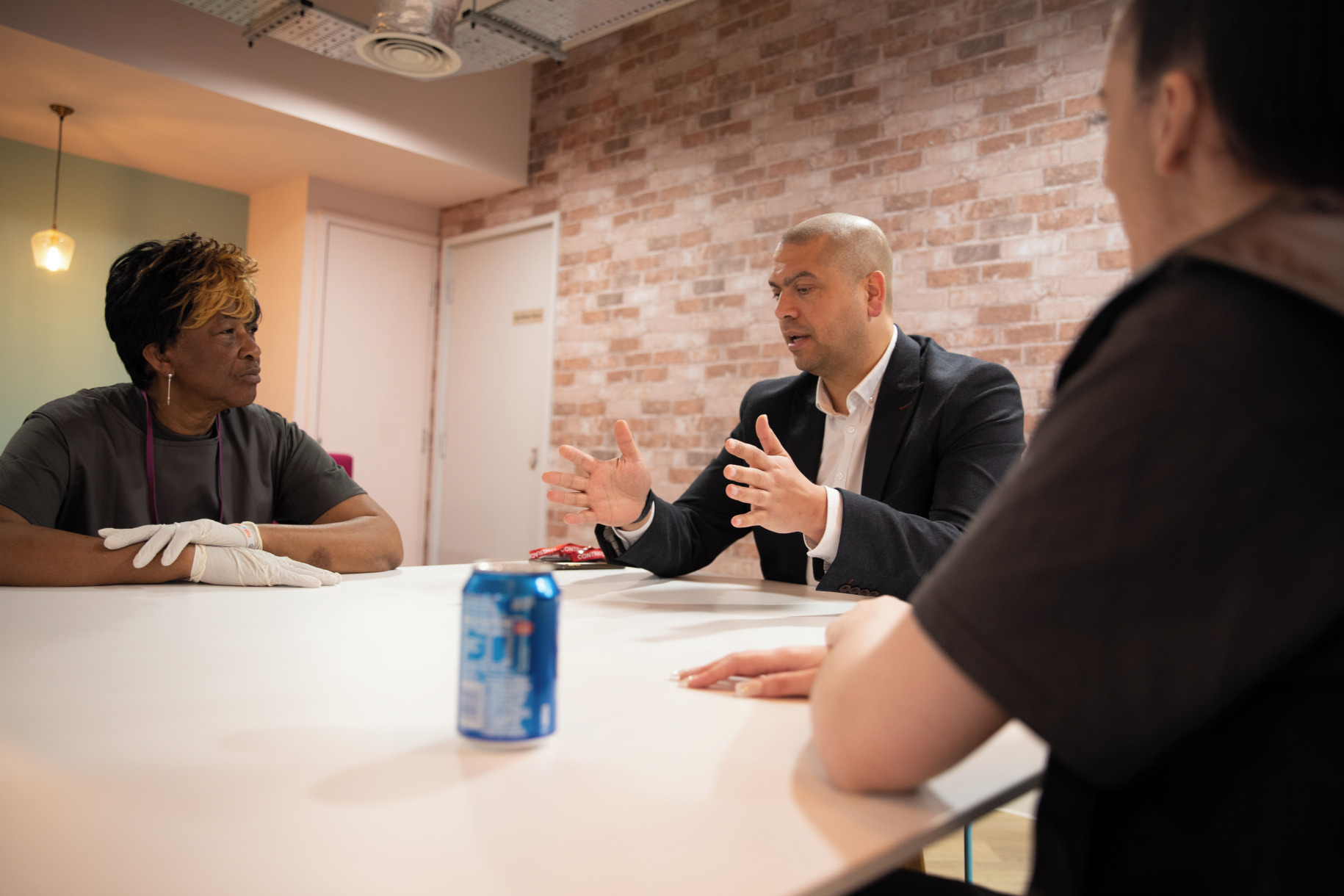
In Getting Wellbeing Right for Under Represented Groups, Dr Balissa Greene, Organisational Psychologist and Executive Coach, challenged the idea that workplace wellbeing can be addressed through individual strategies alone.
Her session focused on how work is not experienced equally — and how many workplace wellbeing approaches are designed around a “typical” employee, meaning they work better for some people than others.
She highlighted that underrepresented groups, including those with long-term health conditions or who are neurodivergent, are more likely to experience higher levels of stress and burnout, while also being less likely to access or benefit from the support available.
This is not simply about awareness. In many cases, support exists, but it does not feel relevant, accessible or designed with people’s experiences in mind.
This makes psychological safety critical. Dr Balissa Greene emphasised the importance of creating environments where people feel able to speak openly about their experiences without fear of judgement or consequence. In many workplaces, it cannot be assumed that all employees feel equally safe to do this.
Rather than focusing solely on what individuals should do differently, the session encouraged organisations to look more closely at the systems around people, including how work is designed, how decisions are made, and how people are supported day to day.
As reflected in the conference discussions, wellbeing is shaped not just by individual behaviour, but by the conditions in which people are working.
And so the role of the organisation is reframed. If the experience of work is creating pressure, imbalance or exclusion, then self-care alone cannot resolve that. At best, it helps people cope. At worst, it risks placing responsibility on individuals for challenges that sit at an organisational level.
While the session did not offer a fixed set of actions, it challenged organisations to take a more critical look at how their current approach to wellbeing is experienced, who it works for, who it doesn’t reach, and where changes to design, access and culture may be needed.
The role of work design and organisational responsibility
This moves the conversation beyond awareness and into responsibility.
In discussions on work-related stress, including those led by the Health and Safety Executive (HSE), the message was clear: organisations are expected to identify and address the root causes of stress within the way work is designed, rather than relying on individuals to manage the impact.
This is not simply good practice, it is a core part of an organisation’s responsibility.
This includes understanding workload, how demands are experienced across different roles, and where pressure is created in day-to-day work.
A clear message from the conference was that well-designed workplaces can actively support wellbeing, not just prevent harm.
This also reinforces a key point raised earlier: work is not experienced equally. A one-size-fits-all approach to wellbeing, including self-care, will inevitably work better for some people than others.
What this means in practice
Taken together, these insights point to a more balanced approach. Self-care has a role to play. It helps people manage pressure, build awareness, take ownership of their own health, and create space to recover.
But it cannot carry the weight of workplace wellbeing on its own.
For employers, the opportunity is to move beyond awareness and look more closely at how work is experienced, and where it may be creating pressure.
This means: – creating environments where people can step back when needed, without feeling they have to push through – ensuring workload and expectations are realistic and sustainable – making support visible, relevant and easy to access – supporting managers to recognise when things are shifting and respond with confidence
It also means recognising that self-care is not just something individuals do outside of work, but something that needs to be enabled — and normalised — within it.
From awareness to action

The opportunity now is to ensure that this awareness leads to lasting change.
Within the Leeds Mindful Employer Network’s new Mentally Healthy Workplace Toolkit, this is reflected in the Supporting Your People theme, which focuses on practical actions to help organisations embed wellbeing into everyday work, including supporting self-care in a way that is realistic, inclusive and connected to everyday work.
Rather than asking: Are we encouraging self-care?
A more useful question may be:
Are we creating the conditions that make self-care possible?
Final thought
Self-care matters. But it cannot sit with the individual alone.
The organisations making the most progress are not simply encouraging people to look after themselves. They are taking a broader view — shaping work, leadership and culture to support people day to day.
Getting the balance right between individual and organisational responsibility is where meaningful change happens.
Useful Links
Join the Leeds Mindful Employer Network
Check out our new Mentally Healthy Workplace Toolkit