


Helplines Awareness Day 2026: Supporting Employees in Crisis with Here For You
Helplines Awareness Day 2026 is a national campaign that "shines a spotlight on the incredible work of helplines across the UK". For the Leeds Mindful Employer Network, it's a timely reminder that support can only work if people know it exists and they feel able to use it.
Almost 1 in 4 of us will think about suicide at some point in our life [1]. Approximately 15 people die in the UK every day by suicide [2]. Talking about suicide saves lives.
In this blog, we will first explore what a crisis is and how you might identify someone in crisis before highlighting local and national crisis support services.
What is a Crisis?
A crisis is when someone reaches a tipping or breaking point at which they cannot safely manage themselves and require additional urgent help to cope with how they are feeling. This can happen to anybody.
The most obvious sign of a crisis is someone having thoughts of self-harm or suicide, but other key signs of people reaching a crisis point include:
In the workplace, there are additional signs that might indicate someone’s mental health is worsening:
When a person starts to behave or do things that aren’t normal for them in a situation, this can be a sign that something is wrong.
What can you do if you notice someone may be in crisis.
When we notice changes in others, we need to ask how they are feeling in a non-judgmental way to identify the correct support to help the individual. We can do this by:
When we speak to them, it is important to avoid mistakes such as:
What if my workplace already offers Wellbeing Support?
Wellbeing provisions provided by an employer are an important preventive measure to support an employee’s mental health. However, if someone is experiencing a crisis, crisis services and helplines provide immediate or same-day intervention to protect the individual from harm and keep them safe.
If your employer offers wellbeing support through an Employee Assistance Programme (EAP), it is worthwhile checking if the provider offers crisis support, and that staff within your organisation are made aware of this so they know if or where to signpost someone in crisis.
How can we signpost someone to the correct crisis support?
Firstly, if you notice any of the below, always escalate to emergency services (999).
If the individual is not in immediate danger, explaining the range of alternative local crisis services available will empower them to choose the support that is best for them.
Some support services might allow you to refer an individual on their behalf. Before doing this, you MUST gain the consent of the individual.
After you have signposted an individual to a service, you may wish to follow up. To do this, you can speak with the individual and find out if they reached out for support. You MUST NOT:
If you are the manager of the individual, you may wish to regularly check in with how they are coping outside of usual supervision meetings.
How can an employer create meaningful engagement beyond simply raising awareness?
Employers should create a supportive working environment through open conversation and regular check-ins. This could increase the likelihood of colleagues noticing the previously mentioned signs of someone’s mental health worsening or reaching a crisis point.
Displaying promotional material of support services in visible areas within the workplace, such as in bathrooms and communal spaces, will increase the awareness of what is available to employees.
Employers should ensure that employees are educated on the signs of a crisis and the support services that are available.
Undertaking training can develop an employee’s awareness to identify someone in crisis and respond effectively to ensure they get the correct support for them.
Zero Suicide Alliance provide a short, free, online course that can be taken by anyone who wants to learn basic suicide awareness and prevention skills.
There are also paid trainings available, such as “ASIST (Applied Suicide Intervention Skills Training)”, which is delivered in person and provides more in-depth suicide intervention skills. If you wish to learn more about what training is available, please reach out to hereforyou@touchstonesupport.org.uk
What Crisis Support is Available in Leeds
There are many different services and helplines offering crisis support. For the most up-to-date opening hours and contact details, please see each individual website.
Here For You – Touchstone
Open every day of the year, including weekends and bank holidays.
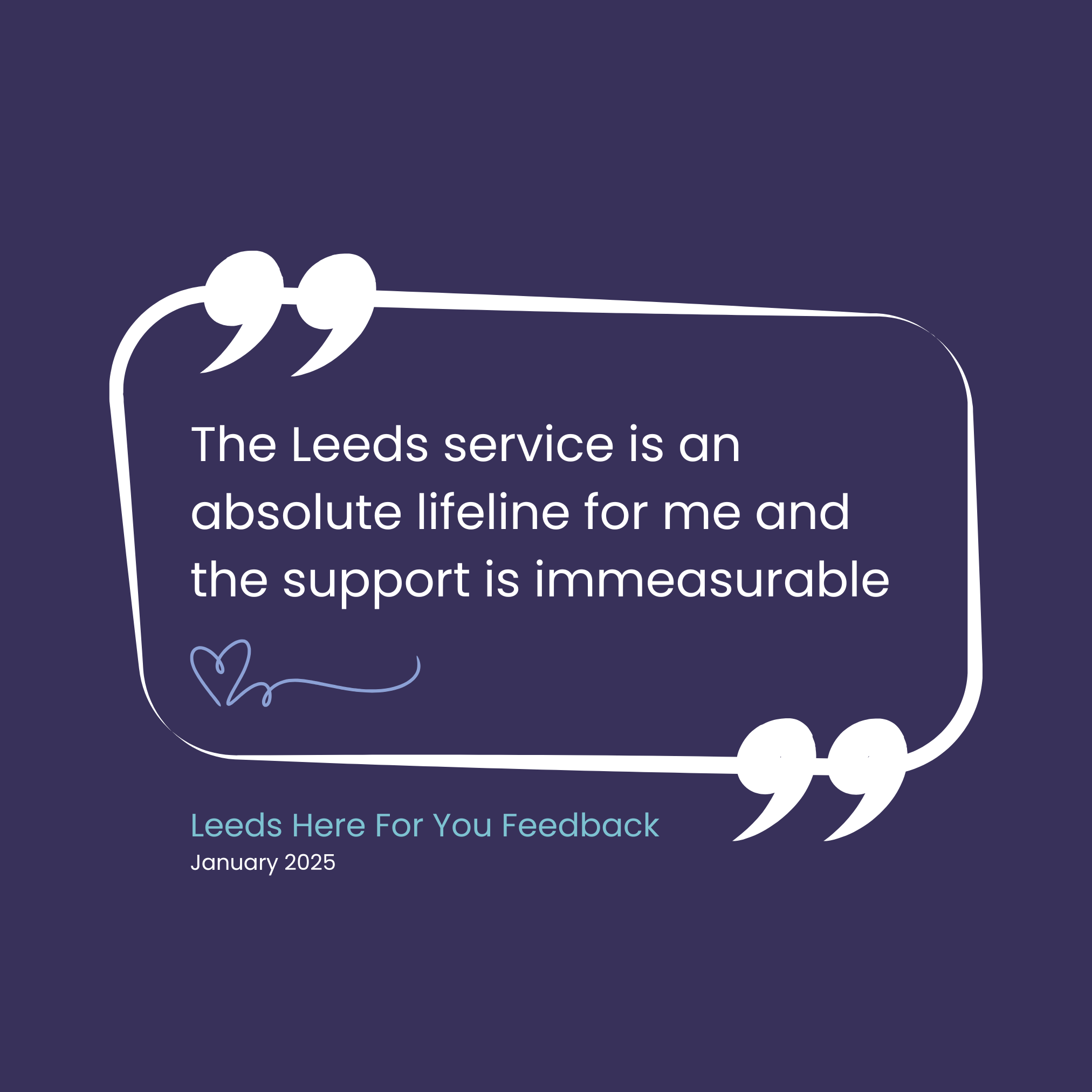
Here For You is a vital community support service offering same-day urgent mental health support across Leeds, Kirklees, and Wakefield for anyone aged 16 years or older who is experiencing emotional distress, thoughts of self-harm, or suicidal ideation.
Individuals can receive 1-to-1 support in person or over the phone from one of our trained, local staff. Free taxis are available for those who are unable to make their own way or do not feel safe to do so.
The services are open to self-referrals or referrals on behalf of others, with their consent, via an online form, which is open 24/7, or over the phone during opening hours. Opening hours for each area, along with referral numbers, are below:
Website (with online referral form): https://touchstonesupport.org.uk/hereforyou/here-for-you-leeds/
Dial House – Leeds Survivor Led Crisis Service
The best time for an individual to refer is between 6pm-6:45pm and this can be done by call or text on the night an individual would like support.
Website: https://www.lslcs.org.uk/services/adult-services/dial-house-2/
National Helplines – these are all available 24 hours a day
NHS111 – for urgent medical care or mental health support, but it’s not life-threatening.
Samaritans – for anyone who is struggling to cope and needs someone to talk to.
SHOUT – free and confidential text messaging service for anyone in the UK who needs support.
Helplines for Young People
Night OWLS – for children, young people up to the age of 25, their parents and carers who live in Bradford, Leeds, Calderdale, Kirklees, Wakefield and Barnsley.
Open 8pm-8am every day of the year (Weekends and Bank Holidays included).
Papyrus HOPELINE247 – nationwide helpline for children and young people under the age of 35 who are experiencing thoughts of suicide.
Open 24 hours every day of the year (Weekends and Bank Holidays included)
Thanks so much to the Here for You team for contributing this guest blog for the Leeds Mindful Employer Network.
If you or someone you know is struggling, the helplines and services listed above are there to help. Reaching out is a strength, and help is available.