


Few and Far: Journey from Network Member to Toolkit Developer
Before starting Few and Far, what did your experience as an employee teach you about the difference a workplace can make to people’s mental health and wellbeing?
Most of what affects how you feel at work has very little to do with the work itself. The creative industry has its own pressures, tight deadlines, creative block, feedback that lands badly on a Friday afternoon, and none of that is ever going away. What changes is whether the people above you acknowledge any of it exists.
I had my own experience of mental health at work long before Few and Far, and the difference between somewhere you can say that out loud and somewhere you can’t is enormous. It shows up in small things, whether you feel able to take the day, whether you spend the afternoon working or spend it worrying about how the afternoon looks.
When you and Thomas (Few and Far Co-Founder) moved from being employees to running a micro business, how did the responsibility of supporting a team change the way you thought about workplace mental health?
When it’s two of you and a small team, there’s nobody to escalate to and no HR department to hand it over to. Whatever culture exists is the one Tom and I are modelling, day to day, whether we mean to or not.
That can be uncomfortable when you think about it properly as small decisions carry more weight than they would in a bigger organisation.
What were the particular challenges of trying to create a positive workplace culture while also establishing and growing a small business?
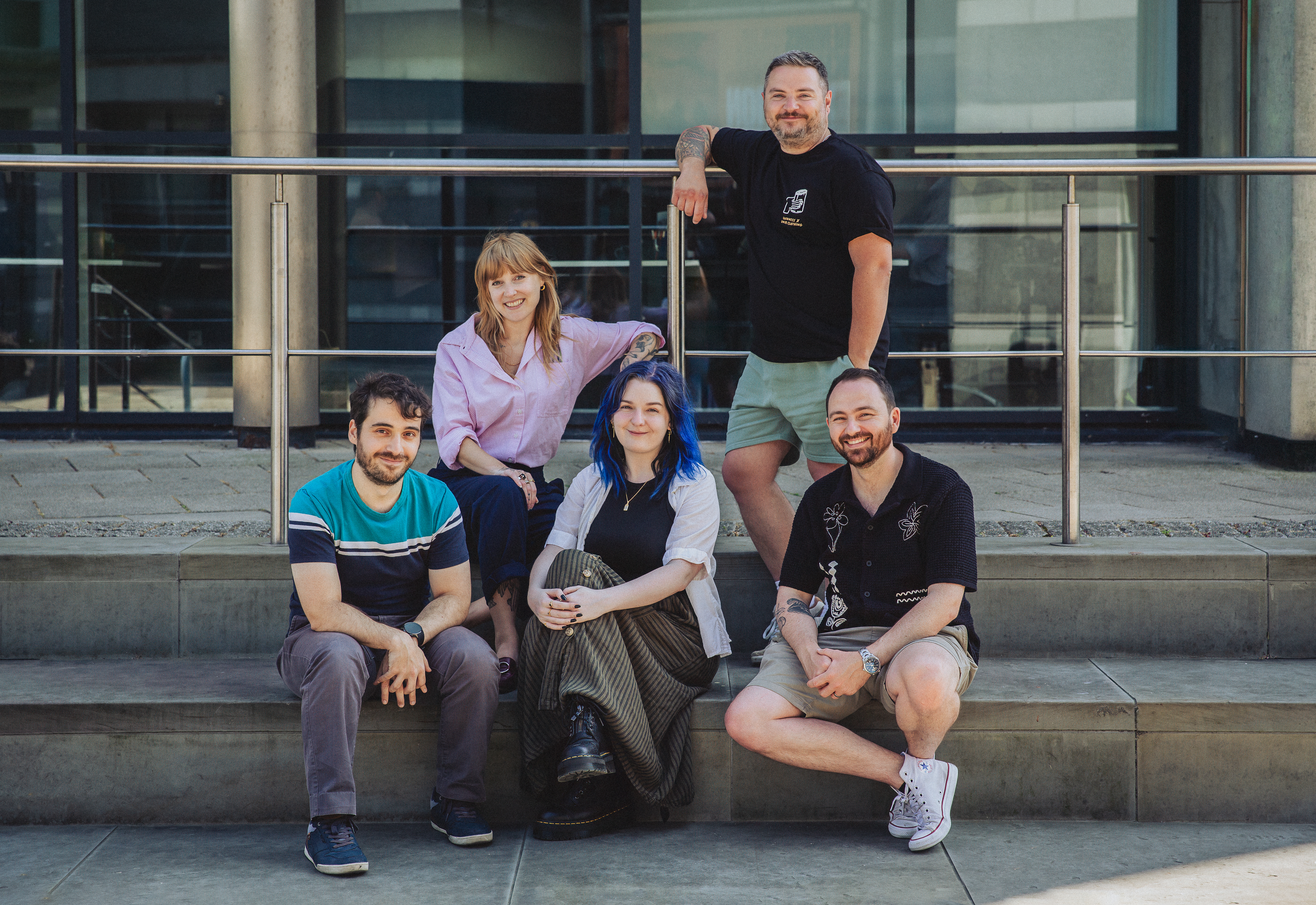 From starting a two person venture to hiring staff, the simple ‘are you ok?’ check-ins across a table have to completely evolve. I’ve always been aware from previous experiences of those around me and how my own mood and feelings can affect team mates, but when it was only myself and Tom it’s easy to just be open.
Being open in an office with six people is completely different as not everyone wants to open up; all we can do is try and ensure they feel like they can open up if they want to.
The genuinely difficult bit in company growth is the gap between saying you’ll do or believe in something and actually ensuring it happens day to day. Becoming a
Certified B Corp was actually something that really helped ‘codify’ what we said and what we believed as business owners into genuine policies for our staff and our culture.
What first brought Few and Far to the Leeds Mindful Employer Network, and what were you hoping to gain from becoming a member?
We signed the charter in 2023 and what we wanted was straightforward. We had good instincts on workplace mental health but no framework, and no HR function to build our own with. The Network gave us other employers to compare notes with, and the charter gave us something to be held accountable to rather than another logo on our website.
We were introduced to the Network through Leeds Mind and a talk I gave at their ‘Business Connections’ event. They spoke at the same event and it instantly sounded like something we would want to be part of and to champion moving forwards.
How did being part of the Network support you as a small employer with limited time and resources?
Mostly by giving us access to things we could never have built ourselves. Mindful Employer+ came with a confidential advice line for the team, independent of me and Tom. That independence matters more than it sounds, because people won’t always want to bring things to their bosses, and pretending otherwise is a bit self‑flattering.
The rest is the network itself. Seeing what other employers in Leeds are doing and lifting the parts that fit, instead of starting from a blank page every time.
How did you use the original Ten Steps Toolkit, and which parts had the greatest influence on Few and Far’s approach?
We used it as something to check ourselves against. It was most useful for the things we’d never have arrived at on our own, and it gave us a structure to review against, which is where the habit of reviewing the environment, the policies and the benefits on a rolling basis came from. A mentally healthy workplace isn’t something you finish.
I knew that being able to champion workplace mental health needed to be a core focus as breaking the stigma of mental health has always been a personal driver for me anyway, as a designer, as a man, as a business owner; That's where we started with the Toolkit because I wanted to ensure we emphasised that the environment our team work in, allows you to speak about how you feel without judgement.
What was it like to go from using the Network and Ten Steps as an employer to being asked to redevelop the resource for other organisations?
Leigh and the team came to us in 2025 about replacing Ten Steps, and it wasn’t a normal brief, because we’re the people it’s made for.
That helps and it doesn’t… You know exactly where a resource falls short, because you’ve been the one trying to use it on a Tuesday afternoon with twenty minutes spare. You’re also aware you’re now deciding what every other employer in the network gets, which is a different sort of responsibility to building a website.
It has been a lovely ‘full circle’ moment for us as business owners and we’re really proud of how the Toolkit now functions, but this is just the start.
How did your experience as a micro business owner shape the new Mentally Healthy Workplace Toolkit?
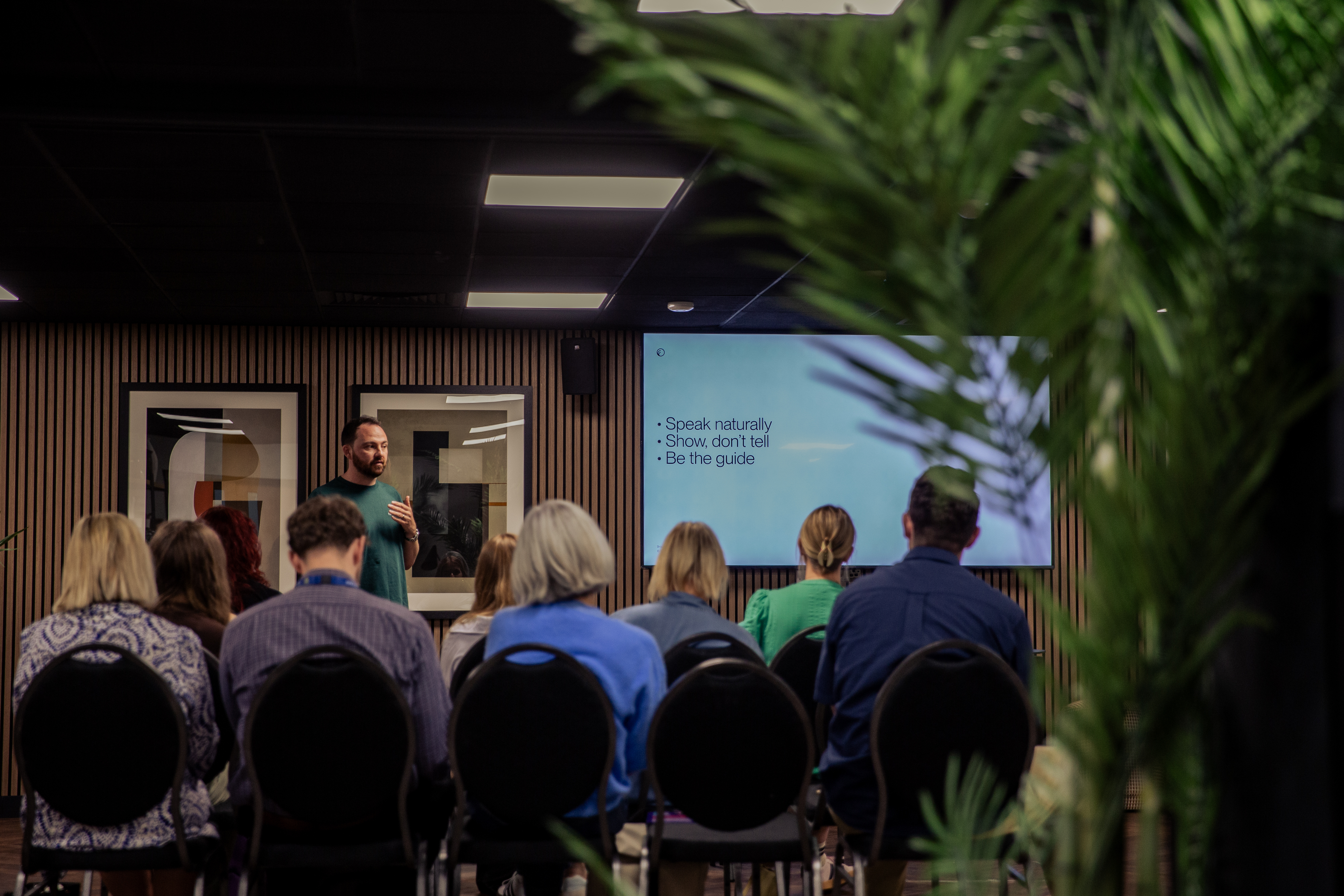 It’s worth saying the old site had served the network perfectly well for years, so this wasn’t a rescue job. The problem was subtler. Ten numbered steps get read as a sequence whether you meant them that way or not, and workplaces don’t run in sequence.
If you’re a small employer, step four might be completely irrelevant to you and step nine might be the thing keeping you awake. So it’s three themes now instead of ten steps (leading the way, designing good work and supporting your people), with tasks underneath that you pick up in whatever order suits. That comes directly from running a small team. You do the thing you’ve got capacity for this week.
How did you make sure the new toolkit would be practical and achievable for organisations of different sizes, sectors and starting points?
No fixed order, so nobody has to start at the beginning to be allowed to start and tasks that are small enough so that you can actually finish one.
Accessibility was rebuilt properly and now meets WCAG 2.2 AA, which felt non‑negotiable, because a resource about including people that excludes people is hard to defend. The language went through a full check too, it had been describing people rather than including them.
And the employer spotlight runs alongside everything, so good practice turns up attached to a real organisation and a real name instead of sitting there as theory. There’s a benchmarking tool coming as well, so organisations can see where they actually are rather than guessing.
What are you most proud of when it comes to the new toolkit?
Probably that the team at Mindful Employer can change it themselves now. The old structure was rigid enough that fundamental changes meant ringing a developer, and that’s the difference between a resource that stays current and one that quietly ages. Not glamorous, but it’s the thing that decides whether any of this is still useful in three years.
The spotlight is the other one. Having real employers named on the site, rather than the network being almost invisible on its own website, changes what the whole thing feels like.
Having benefited from learning alongside other employers through the Network, Few and Far is now creating spaces for organisations to learn from each other. What prompted you to introduce your new Town Halls?
We wanted to run a traditional town hall meeting for our staff, to give them further insight into how we are progressing as a business, but because we like to do things differently, we wanted our partners to be part of it too, so we ‘opened our doors’ to those we partner with and admire, kept the Town Hall moniker and made it an event.
Getting good people in a room in Leeds for a morning, a handful of short talks, no breakouts, no lanyards, everyone away before lunchtime. Charity teams rarely get time to compare notes with each other unless it’s a conference they’ve had to justify the ticket price for, and that’s a shame, because most of the useful stuff in this sector travels sideways rather than down.
We joined a network because we didn’t know what we were doing and other people seemed to. The Town Hall is us trying to make that room exist for charities, who have the same problem with digital that we had with being an employer. Good intentions, no time, and nobody obvious to ask.
It also keeps us honest. It’s harder to be vague about your own practice when you’re standing in front of thirty organisations who work with you.
Who should come along to a Town Hall, what can someone expect, and what kind of conversation and atmosphere are you hoping to create?
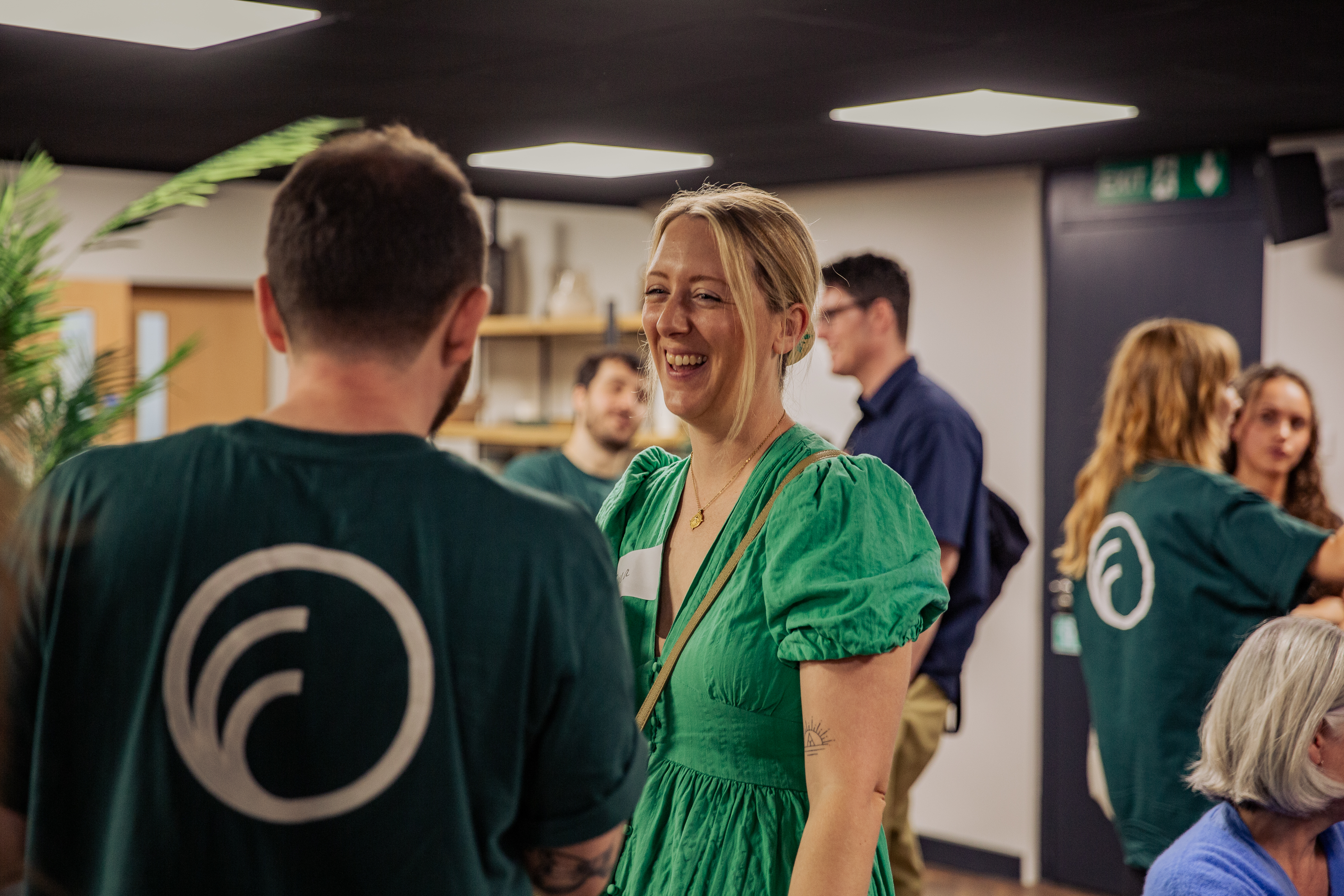 Charity people, mainly the ones making decisions about digital, comms and fundraising, though we’ve deliberately not been strict about job titles. The first one had more than 25 charities in the room.
It’s a morning with coffee and pastries from quarter to nine, short talks from quarter to ten, a breather, then a closing session. The talks are short on purpose, so nobody sits through forty minutes of something that turns out not to be relevant to them.
The atmosphere we’re after is closer to a good conversation than a conference. People asking each other things rather than only asking us. Whether we got that right is probably for the people in the room to say, but after the first one we’ve only had super positive feedback.
What advice would you give to a small employer that wants to support its people more intentionally, but feels unsure where to begin?
Start with something small you can do this month rather than a strategy. The strategy tends to be a way of not starting.
Join something with other employers in it, because the genuinely useful stuff comes from people a year or two ahead of you who have already made the mistake and will tell you about it.
And look honestly at what you’re modelling, because that’s your real policy. If you’re answering emails at eleven at night, that’s what your team will understand the expectation to be, whatever the handbook says.
Thank you so much to Colin at Few and Far for contributing to this blog and for helping us to develop our new Mentally Healthy Workplace Toolkit.
Find out more about Few and Far
Join the Leeds Mindful Employer Network.
Sign the national Mindful Employer Charter.
Would you like your organisation to feature in an employer spotlight? Drop us an email at mindfulemployer@leedsmind.org.uk to tell us your story.